What If Your Memories Are the Biggest Thing You Can't Trust? 👁️

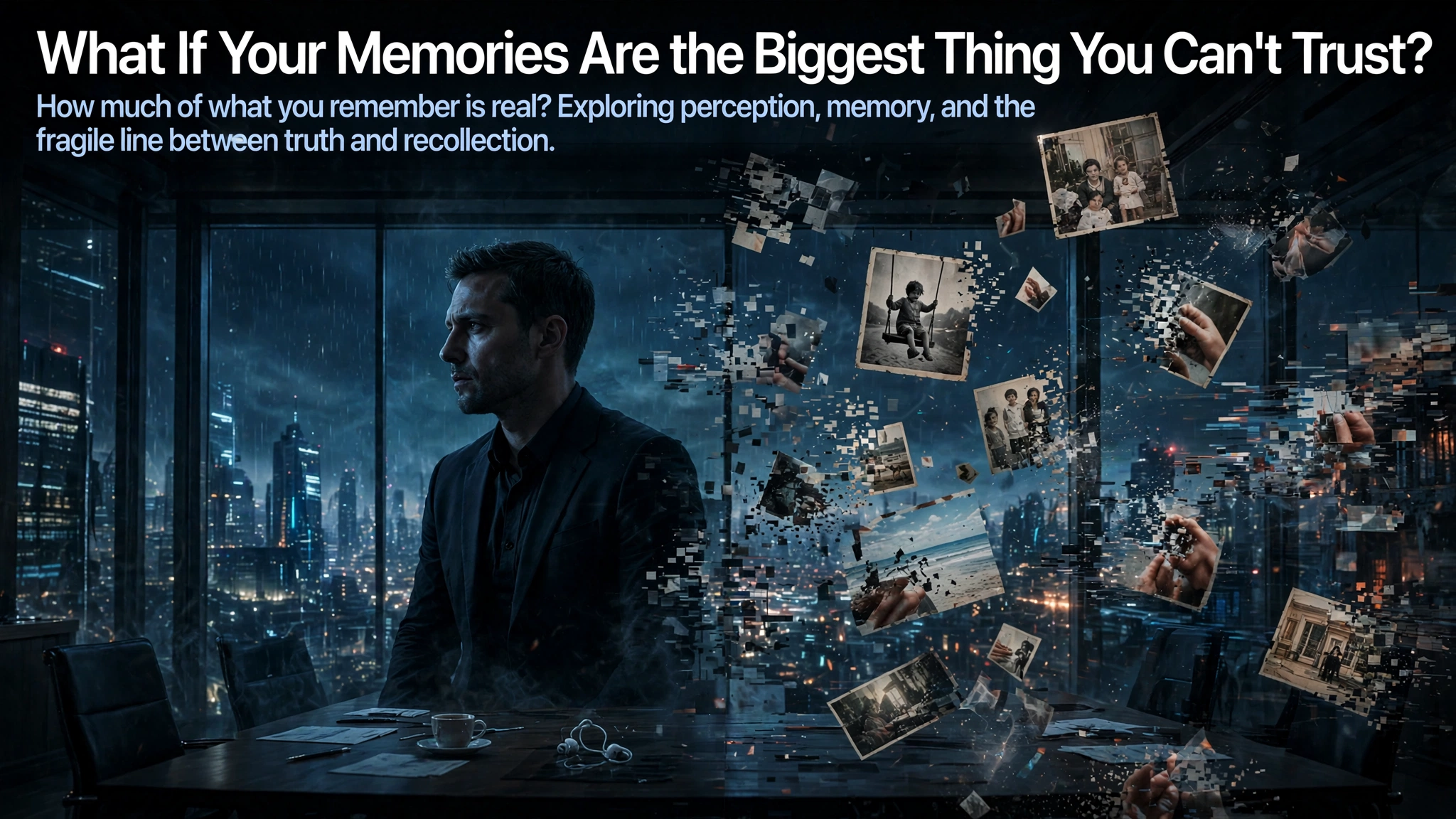
You remember your childhood. You remember conversations, arguments, relationships, and moments that supposedly changed your life. But what if your memory isn't a recording of what happened? What if it's a reconstruction your brain keeps editing every time you revisit it? In other words, what if some of the things you're absolutely certain happened aren't exactly how you remember them? 😂
We tend to treat our memories like personal security footage. We assume that because we remember something clearly, it must have happened exactly that way.
But human memory doesn't work like a camera. It isn't a perfect recording that gets stored away and played back whenever we want. Memory is a reconstructive process. Our brains use fragments of information, emotions, experiences, and existing knowledge to rebuild what we remember.
And sometimes, those details change.
You might remember an argument differently from the person standing across from you. You might remember somebody saying something they insist they never said. You might remember an event as happening in a particular order, only to discover that your timeline is completely wrong.
Neither person necessarily has to be lying.
YOUR BRAIN CAN BE CONFIDENT AND STILL BE WRONG.
That's one of the strangest things about memory. Confidence doesn't guarantee accuracy.
You can vividly remember a conversation, describe where everybody was standing, recall the emotions you felt, and still get important details wrong.
Psychologists have studied how memories can be influenced by suggestion, misinformation, expectations, and the way questions are asked. Even discussing an event afterward can sometimes influence how a person remembers it.
That means remembering something repeatedly doesn't necessarily make the memory more accurate. Sometimes you're reinforcing the version you've reconstructed, not preserving the original event.
WHAT IF TWO PEOPLE ARE ARGUING OVER TWO DIFFERENT VERSIONS OF THE SAME MEMORY?
Think about relationships. Two people break up, and suddenly they have completely different stories about what happened.
One remembers all the sacrifices they made. The other remembers all the times they felt neglected. One remembers trying to fix the relationship. The other remembers being the only person trying.
Both may genuinely believe their version.
Memory is influenced by emotion and perspective. The things that hurt us can become especially important in the stories we tell ourselves about the past.
That doesn't mean every disagreement is just a memory problem. People can deliberately lie, leave out information, or manipulate events. But it does mean that personal recollection isn't automatically an objective record.
Sometimes the argument isn't about what happened. It's about which version of the experience each person has come to believe.
YOUR PAST CAN CHANGE WITHOUT THE PAST ACTUALLY CHANGING.
Here's another interesting part. As you grow older, your interpretation of past experiences can change.
Something you considered normal as a child might look completely different when you're an adult. A conversation you once thought was harmless might eventually reveal a lesson you didn't understand at the time.
The event itself hasn't changed. Your understanding of it has.
That's why people sometimes say, "I didn't realize what was happening back then."
You were experiencing the same event, but you didn't have the same knowledge, maturity, or perspective you have today.
And sometimes that new perspective can make an old memory feel like an entirely different story.
THE INTERNET MAKES THIS EVEN MORE INTERESTING.
Today, we have photographs, videos, messages, timestamps, and digital records that can help verify what happened. But we also have edited clips, misleading captions, manipulated images, and conversations taken out of context.
People can remember an event one way, see a viral post describing it differently, and slowly begin questioning their own recollection.
That's why evidence matters. When the details are important, it's better to examine records and independent accounts than rely entirely on how confidently someone remembers an experience.
And even digital evidence requires context. A screenshot can show a message, but it might not show the entire conversation. A video can capture an incident, but it might not show what happened before or afterward.
SO HOW MUCH OF YOUR PERSONAL HISTORY IS ACTUALLY ACCURATE?
Probably more than you think, but perhaps not in the exact way you imagine.
Most people can remember major life events, familiar places, important relationships, and meaningful experiences with considerable accuracy. The problem is that individual details can become distorted, and confidence can make those distortions difficult to recognize.
That's not a reason to distrust every memory or question your entire existence. It's a reason to remain open to new information.
You can acknowledge that something happened without pretending you remember every detail perfectly.
You can accept that another person experienced the same event differently without automatically accepting their entire version of the story.
And you can change your understanding of the past without feeling like you're betraying the person you used to be.
THE BOTTOM LINE:
What if your memories aren't the permanent recordings you thought they were? What if every time you revisit an experience, your brain reconstructs it using the person you've become today?
Science tells us that memory is flexible, reconstructive, and vulnerable to distortion. That doesn't mean your entire past is fictional. It means human recollection has limitations.
So the next time somebody says, "I remember exactly what happened," remember that confidence and accuracy aren't the same thing.
Your brain might be the greatest storyteller you've ever met. The only problem is that sometimes it forgets to tell you which parts are facts and which parts are edits. 😂







Comments
No comments yet, be the first submit yours below.