We're Living in an Economy Where Being Sick Is Almost as Expensive as Being Healthy

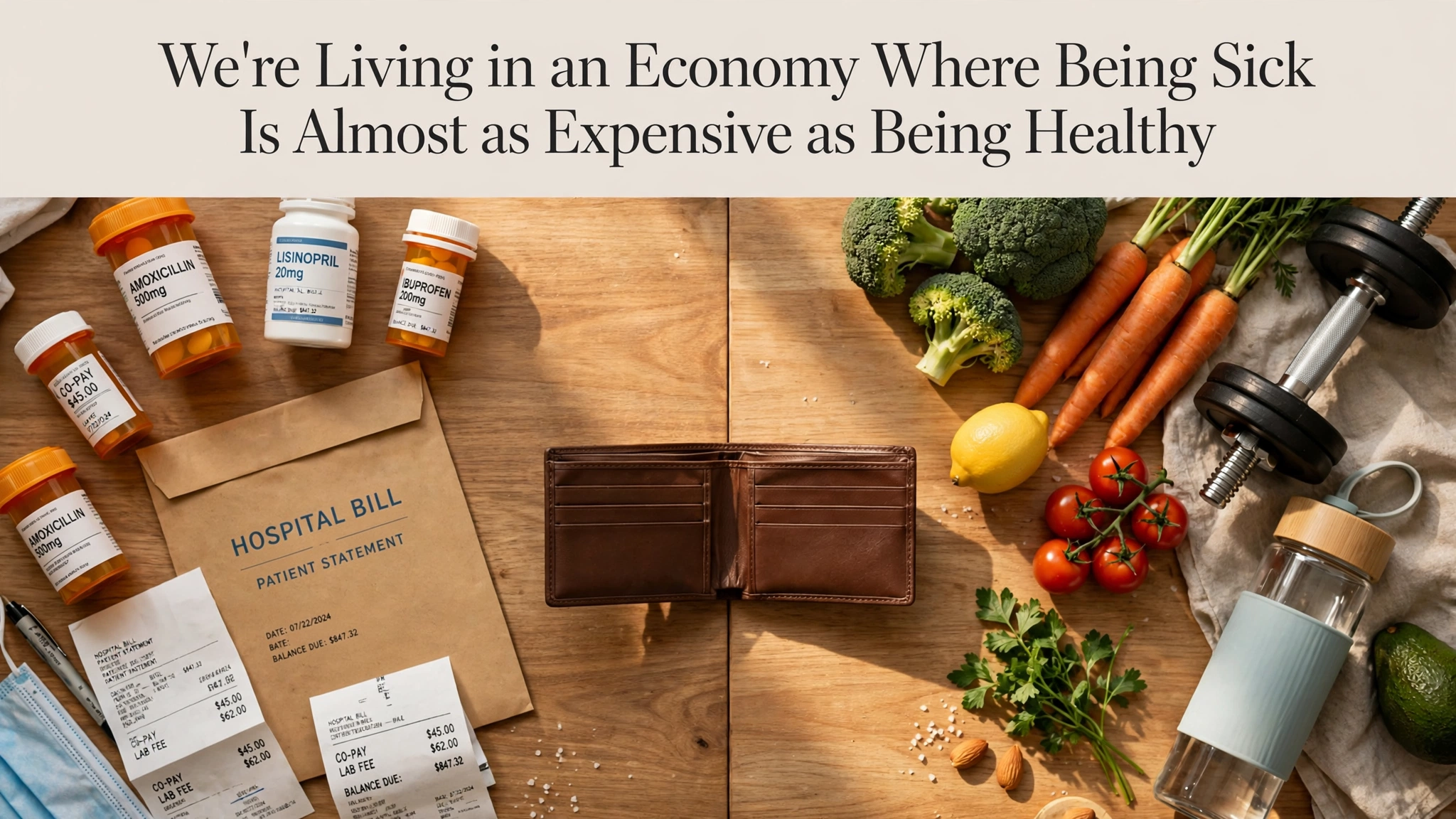
Imagine waking up sick, realizing you need a day off, and immediately calculating whether you can afford to recover. You aren't thinking about getting better. You're thinking about the paycheck you're about to lose, the bills that won't wait, and whether missing one shift is going to throw your entire month off. We've reached a point where some people can't afford to be sick because their financial situation requires them to remain physically available for exploitation.
Think about how ridiculous that sounds. Your body is telling you to slow down, but your bank account is telling you to clock in.
You have a fever? Take something and go to work. Migraine? Turn the lights down and keep moving. Exhausted? Drink another energy drink. Your child is sick? Better hope somebody can watch them because those attendance points aren't going to erase themselves.
Apparently, the human body is expected to operate like a machine with unlimited availability and no maintenance schedule.
GETTING SICK CAN BECOME A FINANCIAL DECISION.
For workers without paid sick leave, missing a day doesn't just mean losing a little time. It can mean losing an entire day's income, falling behind on rent, missing a car payment, or having to borrow money to cover necessities.
And even when paid sick leave exists, not every worker has enough of it to cover a prolonged illness. Some employees have limited leave balances, complicated attendance policies, or jobs where taking time off creates additional pressure when they return.
You're technically allowed to recover, but the financial consequences make the decision feel like a punishment.
That's not a healthy relationship between employment and human beings.
THE WORKPLACE DOESN'T ALWAYS WANT TO KNOW WHETHER YOU'RE WELL. IT WANTS TO KNOW WHETHER YOU'RE AVAILABLE.
We've built entire workplace cultures around attendance, productivity, and coverage.
Some companies reward employees for perfect attendance, as if never getting sick is a professional achievement. Others make calling out so inconvenient that workers show up even when they're clearly not well.
And let's be honest: if someone comes to work sick because they're afraid of losing money, that decision can affect everybody around them.
Your coworkers get exposed. Customers get exposed. Families get exposed. One person's financial pressure can become an entire workplace's health problem.
Then management wonders why everybody is getting sick.
Congratulations. You saved one employee's attendance record and potentially infected the entire department.
THE COST OF RECOVERY ISN'T JUST MEDICAL.
Even when you have health insurance, being sick can create expenses beyond the doctor's appointment.
There's transportation, prescriptions, over-the-counter medication, childcare, food delivery, missed work, and sometimes additional treatment that insurance doesn't fully cover.
For people living paycheck to paycheck, even a relatively ordinary illness can become an expensive interruption.
And if the illness becomes something more serious, the financial consequences can grow quickly.
You're not just fighting an infection anymore. You're fighting the calendar, the bills, the insurance paperwork, and whatever balance is sitting in your checking account.
WHY DO WE TREAT REST LIKE A LUXURY?
Somewhere along the way, being exhausted became a badge of honor.
People brag about working through illness, sleeping four hours, never taking vacations, and answering emails while sitting in a doctor's office.
We celebrate people for pushing through situations where the responsible decision might actually be to stop.
Rest is treated like something you earn after you've exhausted yourself, rather than something necessary to maintain your health.
And the irony is that ignoring your body's warning signs can make a temporary problem worse.
But telling someone to prioritize their health is easy when you're not the one explaining to the landlord why the rent is late.
THE PEOPLE WITH THE LEAST FINANCIAL FLEXIBILITY OFTEN HAVE THE LEAST ROOM TO RECOVER.
A person with substantial savings may be able to take several days away from work without worrying about their basic expenses. Someone living on a tight budget may not have that option.
Two people can experience the exact same illness and face completely different consequences because their financial circumstances are different.
One person schedules a doctor's appointment and rests. The other calculates how many hours they need to work before they can afford the prescription.
That's the part of economic inequality that doesn't always show up in a salary comparison. It's not just how much money people make. It's how much freedom they have when life doesn't go according to plan.
WE NEED TO STOP CONFUSING EMPLOYEE DEDICATION WITH SELF-NEGLECT.
Being dependable is admirable. Taking responsibility for your work matters. But nobody should have to prove their value by showing up sick, ignoring medical advice, or sacrificing their health to protect an attendance statistic.
Employers need realistic sick-leave policies, adequate staffing, and workplace cultures where people can report illness without being treated like they've committed a crime.
Workers also need to protect themselves where possible, understand their leave options, and avoid putting their health at risk just to satisfy unrealistic expectations.
And we need to acknowledge that not everybody has the same ability to make those choices.
THE BIGGER QUESTION
What kind of economy have we created when people are more afraid of missing a paycheck than they are of making their illness worse?
We talk about productivity, labor shortages, employee retention, and workplace efficiency. But we don't always talk about the human beings expected to keep those systems running.
A business can replace a shift. A worker can't always replace their health.
You shouldn't have to choose between recovering from an illness and keeping your financial life intact.
Because if your job requires you to be healthy enough to work but doesn't give you enough financial security to recover when you're sick, that isn't a sustainable arrangement. That's a business model built around pretending human beings don't get sick.




Comments
No comments yet, be the first submit yours below.