What If You're Not Actually Lazy? What If You've Just Lost the Motivation to Keep Working for a Life You Don't Even Want?

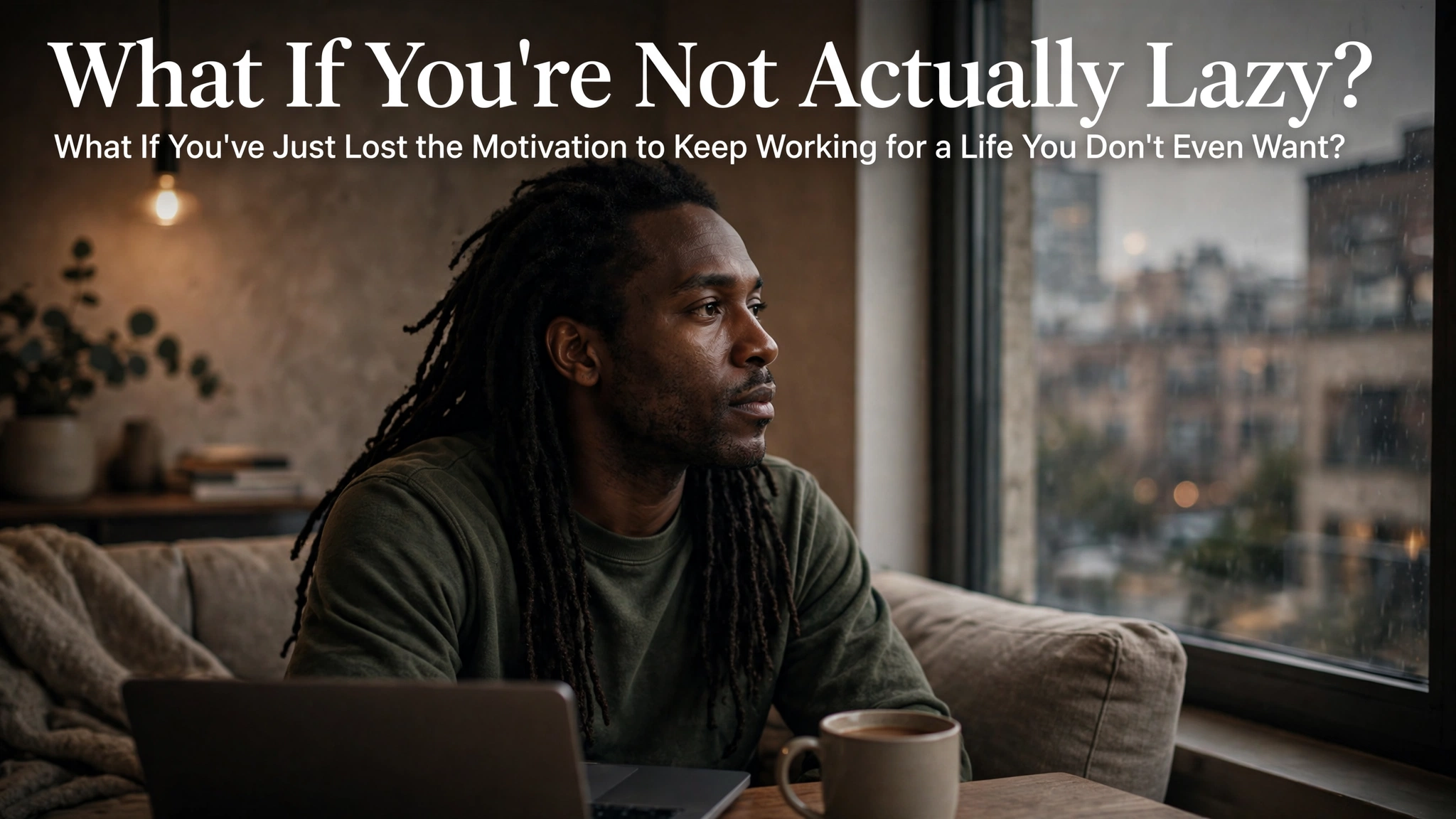
What if you're not lazy? What if you're just tired of waking up every day, repeating the same routine, paying the same bills, chasing the same paycheck, and pretending this is what you imagined life would be?
Somewhere along the way, people started confusing exhaustion with laziness. If you don't want to work overtime, you're lazy. If you don't want to climb the corporate ladder, you lack ambition. If you aren't constantly chasing more money, more possessions, and more responsibilities, apparently you've given up on life.
But what if you've simply started questioning the destination?
Think about it. You spend the majority of your waking hours working to afford a place to sleep, food to eat, transportation to get to work, and enough money to repeat the entire process next week. Then somebody asks why you aren't more motivated.
Maybe the question shouldn't be why people are losing motivation. Maybe we should ask what they're supposed to be motivated by.
The American Dream Started Looking Like a Subscription
You work to afford a car payment. You need the car to get to work. You work to afford rent or a mortgage. You need a home because you need somewhere to recover from working. You buy groceries, pay utilities, maintain insurance, and handle unexpected expenses.
Everything costs money, and nearly every part of your life has a recurring payment attached to it.
Then society tells you that you're supposed to be grateful because you have a job.
Of course, having employment matters. Financial stability matters. But having a job and having a fulfilling life are two entirely different things.
Some People Aren't Afraid of Hard Work. They're Tired of Pointless Work.
There's a difference between working hard toward something you believe in and spending your entire life maintaining a routine that leaves you with no time or energy to enjoy the results.
People will sacrifice their health, relationships, hobbies, sleep, and personal ambitions for a company that may replace them before their farewell email finishes loading.
And when they finally decide they want something different, people call them unmotivated.
Maybe they don't want another promotion. Maybe they don't want another management position. Maybe they don't want to spend 30 years proving their loyalty to an organization that sees them as a position on an employee spreadsheet.
Maybe they want control over their own time.
We Were Taught to Chase Success Without Defining It
From childhood, success is presented like a checklist: Get good grades, go to college, get a respectable job, buy a house, get married, have children, and keep moving up.
But who decided that everybody wants the same life?
Some people want to build businesses. Others want to create music, travel, raise their children, develop technology, or simply live without constantly worrying about the next bill.
There's nothing wrong with ambition. The problem is when ambition becomes a performance for other people.
You can spend your entire life trying to look successful while privately wondering why you're so unhappy.
The Most Dangerous Question Is: What Am I Actually Working Toward?
That question can change the way you look at everything.
Are you building something you own? Are you developing skills that give you more options? Are you creating financial security? Are you investing in relationships that matter? Are you spending time doing anything that makes you feel alive outside of earning money?
Or are you simply maintaining a lifestyle that requires you to keep working without ever getting closer to freedom?
There is no shame in working a regular job. There is no shame in enjoying a career. But there is also no shame in realizing that your definition of success needs to change.
Maybe You Don't Need More Motivation. Maybe You Need a Different Goal.
Sometimes the answer isn't to push harder. It's to stop and examine what you're pushing toward.
Build something. Learn something. Save something. Create another source of income if you can. Protect your time. Make decisions that give your future self more choices.
You don't have to quit your job tomorrow or throw away everything you've built. You can start changing your direction without destroying your stability.
Because the goal shouldn't simply be to become better at surviving a routine you hate.
Maybe you're not lazy. Maybe you're not broken. Maybe you've just reached the point where a paycheck isn't enough to convince you that you're living the life you were supposed to live.
And honestly, that's a conversation worth having.









Comments
No comments yet, be the first submit yours below.