You Spend 12 Years Learning How to Follow Instructions, Then Society Wonders Why Nobody Knows How to Think for Themselves

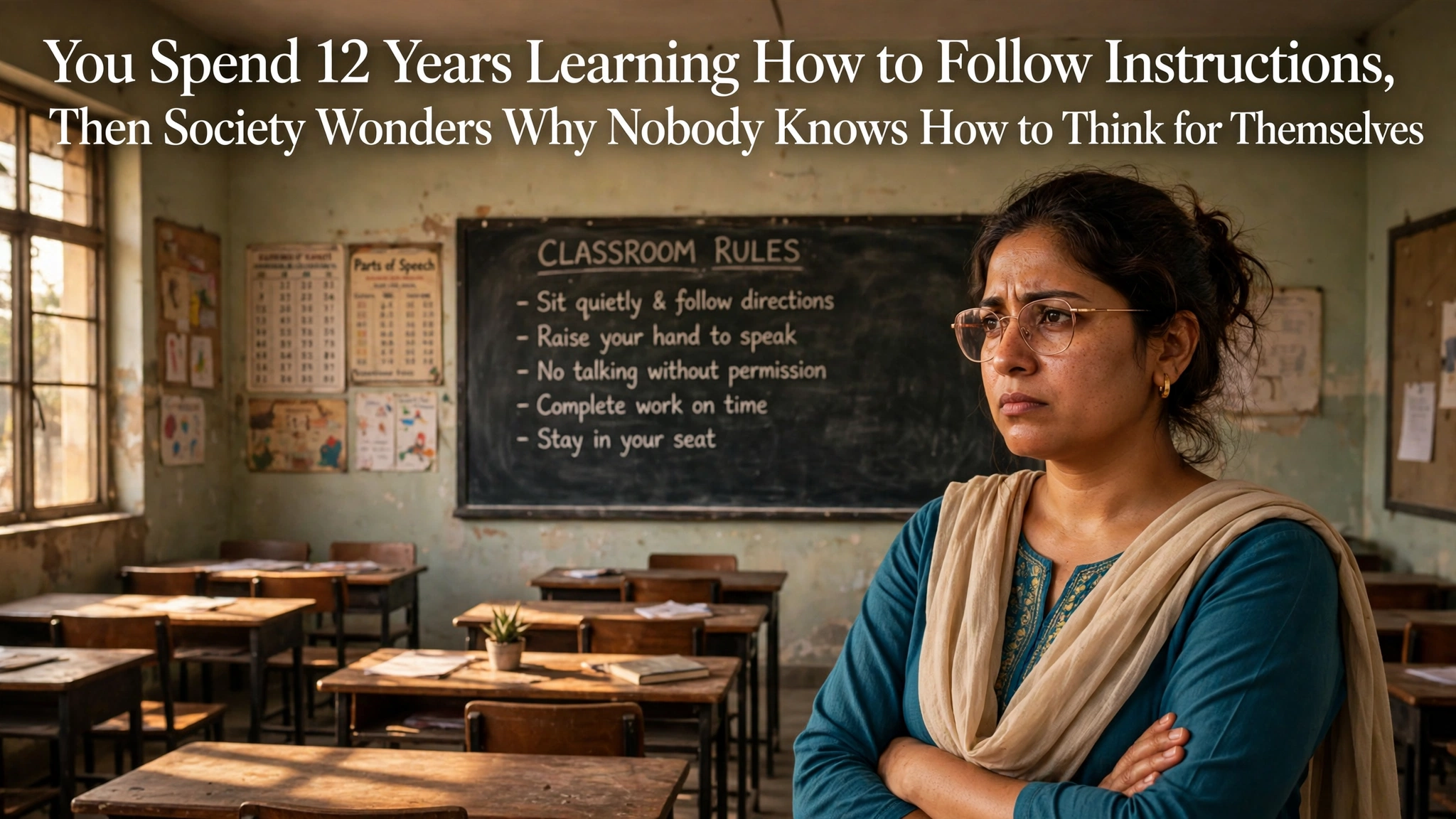
Think about it. For most of your childhood, somebody tells you when to wake up, when to sit down, when to speak, when to eat, when to use the bathroom, and when you're allowed to leave. Then you graduate and suddenly everybody expects you to be an independent thinker. Who taught you how to do that?
We spend years preparing children to function inside systems, but how much time do we spend teaching them to question those systems?
From the moment children enter school, they're introduced to schedules, rules, bells, permission slips, assigned seats, standardized tests, and consequences for doing things differently.
Some structure is necessary. Children need boundaries, discipline, education, and guidance. But there's a difference between teaching children how to function in society and teaching them that functioning in society means never questioning anything.
We're Rewarding Compliance Before We're Teaching Critical Thinking
A child who sits quietly, follows directions, completes assignments, and doesn't disrupt the classroom is often considered a good student.
But what about the child who asks why?
What about the student who challenges an explanation, questions an outdated rule, or wants to solve a problem differently?
Curiosity shouldn't automatically be treated like disrespect. Asking questions is how people develop an understanding of the world.
Of course, classrooms need order. Teachers can't run a productive learning environment if every instruction becomes an argument. But students should also learn that authority doesn't make every statement correct.
Then We Grow Up and Become Employees
After years of following school schedules, many people enter workplaces where the structure looks surprisingly familiar.
You have a schedule. You have supervisors. You have procedures. You have performance reviews. You have policies explaining what you're allowed to do and how you're expected to do it.
There's nothing inherently wrong with workplace structure. Organizations need coordination. But employees who never question inefficient processes can end up maintaining problems simply because somebody higher up established them.
Sometimes the person asking why a process exists is the person who could improve it.
Why Are We So Afraid of Being Wrong?
Think about how many adults hesitate to try something new because they're afraid of looking stupid.
They won't start a business because they don't know everything. They won't learn programming because it looks complicated. They won't create something because somebody might criticize it.
Where did that fear come from?
Part of it comes from growing up in environments where mistakes are treated as failures instead of opportunities to learn. When people become accustomed to being evaluated, graded, and judged, they can start prioritizing the appearance of being correct over the process of discovering what's actually true.
But you cannot develop independent thinking if you're constantly waiting for somebody to approve your thoughts.
Respecting Authority Doesn't Mean Surrendering Your Judgment
There's a major difference between being respectful and being blindly obedient.
You can respect a teacher and still question a lesson. You can respect a manager and still suggest a better process. You can respect laws while participating in conversations about whether those laws are fair.
Critical thinking isn't rebellion for the sake of rebellion. It's the ability to examine information, consider evidence, recognize contradictions, and reach your own conclusions.
Blindly agreeing with everything is no more intelligent than blindly disagreeing with everything.
Maybe We Need to Teach Children How to Think, Not Just What to Remember
Children should learn how to solve problems, manage money, understand contracts, communicate effectively, recognize manipulation, evaluate information, and make decisions.
They should be allowed to ask questions without automatically being labeled difficult. They should learn that making mistakes doesn't mean they're incapable. They should understand that sometimes the most important skill is knowing how to figure something out independently.
Because the world isn't going to hand them an instruction sheet for every situation.
We spend years teaching children to follow instructions, then wonder why adults are afraid to make decisions without permission. Maybe the goal of education shouldn't be producing people who never question the system. Maybe it should be producing people intelligent enough to improve it.








Comments
No comments yet, be the first submit yours below.