Looking for a New Job Is Like Looking for Somebody Else's Ass to Kiss—You Better Have a Resume and a Strong Stomach

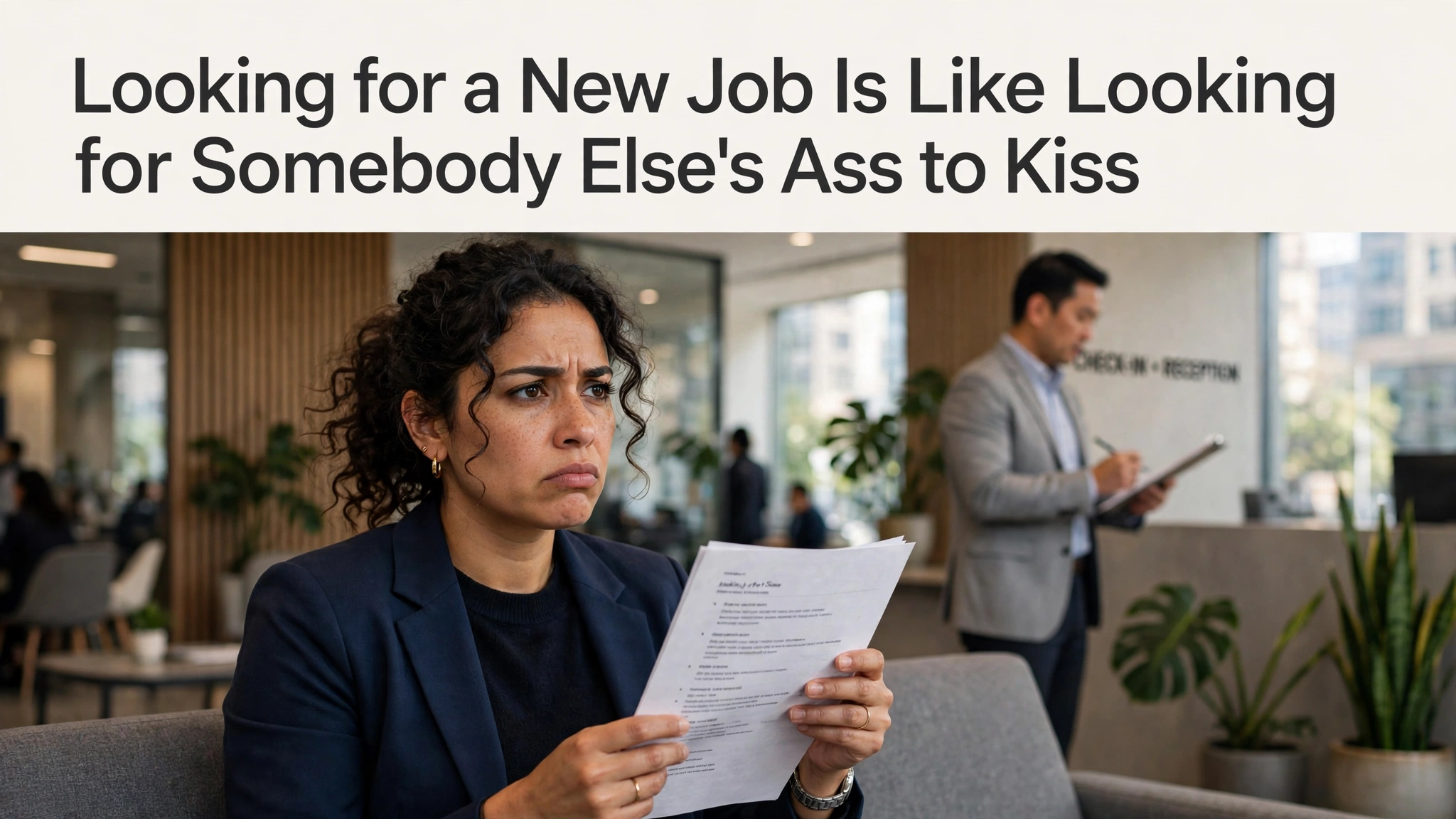
There's something humbling about searching for a new job. You spend hours filling out applications, uploading a résumé, answering questions about your greatest strengths, explaining why you're passionate about a company you've never heard of, and convincing a complete stranger that you'd be honored to spend 40 hours a week making somebody else richer. Welcome to the professional dating game, where you're the applicant and the company is the one playing hard to get.
Looking for a job is an interesting experience because you're essentially asking somebody to give you permission to work for money.
You already know how to work. You know how to show up, follow instructions, solve problems, communicate, and handle responsibilities. But apparently, none of that matters until you successfully convince a hiring manager that you're worthy of an interview.
And the interview? That's where the entertainment really begins.
Explain Why You Want to Work Here
One of the funniest questions in the job-search process is, "Why do you want to work for our company?"
Let's be honest. I want to work here because you advertised a position, I need an income, and your company appears to have money available for payroll.
But that's not what they want to hear.
You're supposed to explain how the company's mission aligns with your personal values, how you've admired its culture for years, and how this opportunity represents the next chapter of your professional journey.
Meanwhile, you discovered the company 11 minutes before submitting the application.
The Résumé Isn't Enough Anymore
Apparently, telling somebody what you've accomplished isn't enough. You also need to create an account, enter your employment history manually, upload the résumé containing that exact employment history, retype your education, answer 30 questions, and sometimes record a video explaining why you're excited about the opportunity.
Some applications feel like you're applying for a security clearance just to stock shelves.
And after all that work, the automated system might send you a rejection email before a human being ever looks at your information.
Imagine spending 45 minutes applying for a job and getting rejected by a computer that doesn't even know how to pronounce your name.
The Interview Is an Audition for Basic Respect
Then comes the interview, where you're expected to present yourself professionally, smile, maintain eye contact, and demonstrate enthusiasm.
They ask about your weaknesses, your five-year plan, and how you handle difficult situations.
But nobody asks whether the manager knows how to communicate, whether employees receive proper training, or whether the company has any intention of respecting your time.
You're being evaluated for whether you'd make a good employee, but you're also supposed to be evaluating whether this would make a good workplace.
That second part gets forgotten when people are desperate for a paycheck.
Companies Want Loyalty Before They've Earned It
Some employers talk about loyalty, teamwork, dedication, and going above and beyond. But the relationship can become one-sided when employees are expected to sacrifice personal time while the company treats them as replaceable.
You can give a company years of your life, help train new employees, cover shifts, and keep operations running. Then one day, management decides to restructure, cut expenses, or eliminate your position.
That's why it's important to understand the difference between being a dependable employee and making a company your entire identity.
Your employer provides a paycheck in exchange for your labor. That can be a perfectly reasonable arrangement. But it doesn't mean you owe the company your entire existence.
Remember, You're Interviewing Them Too
One thing people forget during a job search is that an employer isn't doing you a personal favor by hiring you.
They're looking for somebody to perform work that their business needs done. You have skills, time, experience, and labor that have value.
Ask about the schedule, compensation, expectations, benefits, management, and opportunities for advancement. Pay attention to how they treat you during the hiring process because that can tell you something about how they operate.
Don't confuse desperation for employment with an obligation to accept disrespect.
Make Money, But Don't Lose Yourself Trying to Impress Somebody
There is nothing wrong with having a job. There is nothing wrong with working for somebody else. Employment can provide stability, experience, benefits, and opportunities.
But the process shouldn't require you to pretend that a company is your lifelong dream just to earn a living.
Be professional. Be prepared. Show what you bring to the table. But remember that an interview is a business conversation, not a ceremony where you prove you're worthy of being allowed to survive.
Looking for a job sometimes feels like going door to door asking somebody to let you work, then thanking them for considering the privilege of paying you. But never forget: They need somebody to do that job just as much as you need a paycheck. You're not begging for a seat at somebody else's table. You're offering something of value in exchange for compensation. Act like you know it.










Comments
No comments yet, be the first submit yours below.